r

Monstrous Mega Farm Could Imprison Millions of Birds Each Year – Object Now!

Plans for a huge chicken farm in Melmerby, North Yorkshire, would confine up to 360,000 birds at once, meaning 2.7 million individuals would suffer short, miserable lives there each year. Tell the council to reject this cruel plan!
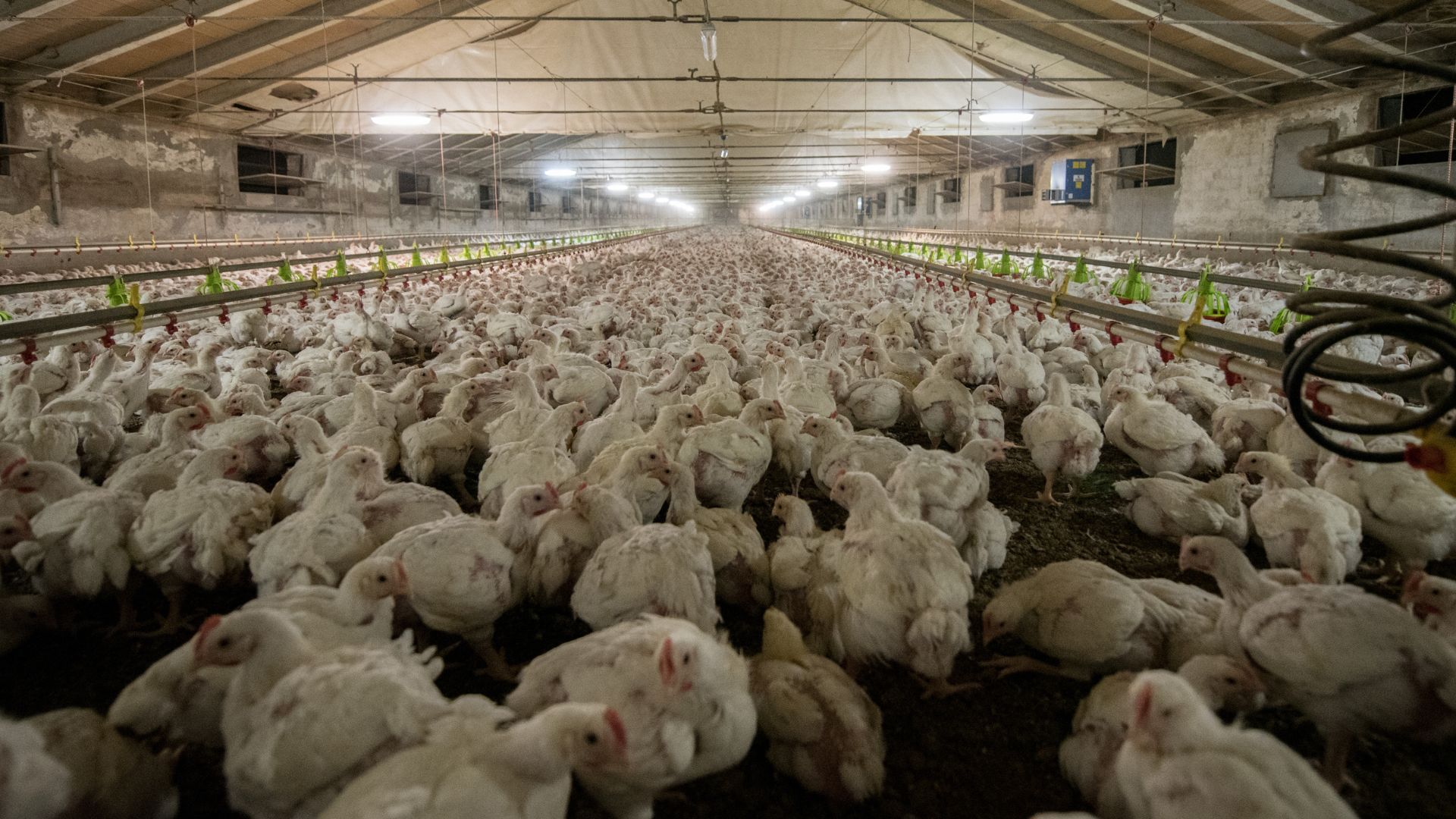
Stefano Belacchi / Animal Equality / We Animals

See the Individual

Chickens are curious, social animals who enjoy exploring, dustbathing, and spending time with others. They can recognise faces and feel pain and distress, just like dogs, cats, and humans.

But on farms like the one proposed, they would never get the chance to do any of this.

A Short, Miserable Life

This farm would consist of six sheds, each with 60,000 chickens. The farm expects to see 7.5 flock cycles per year, meaning 2.7 million birds in total will be housed there. 

Chickens kept on farms like this barely have enough space to move or stretch their wings. They are bred unnaturally fast, so they’re ready to be slaughtered when they’re around six weeks old. Their size leads to painful health problems, including difficulty walking, heart issues, and breathing problems.

Many chickens collapse under their own weight or are unable to reach food and water. Some suffer burns from sitting in waste that builds up on the floor, as sheds are typically only cleaned between flocks.

A Violent Death

When birds reach slaughter weight- usually around 42 days, they are caught by their legs and  thrown onto trucks, then transported to an abattoir.

Many chickens suffer injuries during handling and transport. Those who survive the journey are typically stunned using gas or electricity before their throats are cut. Some may still be conscious when they are killed. 

Risks to Public Health

Facilities like this act as breeding grounds for disease.

The UK is already dealing with repeated outbreaks of bird flu, and large-scale farms holding thousands of stressed, closely confined birds may increase the risk of outbreaks and spread. These diseases can affect other animals and, in some cases, humans. Many experts believe that bird flu could be the next pandemic. 

Environmental Damage

Waste from hundreds of thousands of chickens produces large amounts of ammonia, which may be released into the surrounding environment. Ammonia pollution is known to damage sensitive habitats and affect air quality. 

Run-off from the site could also pollute local land and water sources. The UK is already facing a water pollution crisis linked to intensive farming, including run off from chicken farms.
 

We Don’t Need Another Factory Farm

The last thing this country needs is yet another animal farm condemning thousands of animals to miserable lives and painful deaths while desecrating the environment.  

Increasing the number of intensive animal farms works against the UK’s emissions targets, plans to protect nature, and move towards more sustainable food systems.

Take Action

Please speak out by signing the petition and asking North Yorkshire Council to reject this cruel plan. You have until 4 June 2026 to do so. 

Please use your full name and email. Invalid entries will be removed from the petition. Please note that the council may publish your name along with comments related to this application.

Sign the Petition Today

UN MIS Petition Description Text - *Important Note* You must UNLINK this shared library component before making page-specific customizations.

Planning application 26/02174/EIAMAJ

Dear Cllr Brown,

We are writing in relation to planning application 26/02174/EIAMAJ, which seeks permission for the construction of an intensive poultry unit and associated infrastructure at land adjacent to Underlands Lane, Melmerby.

We object to this proposal for the following reasons:

•    Operations on the farm – as well as the chickens’ waste and the bodies of dead birds – would likely produce strong odours, disturbing residents and impacting their quality of life.
•    Ammonia from chickens’ waste would be emitted from the farm into the surrounding area. The ammonia will likely harm air quality and potentially have a detrimental effect on human health, wildlife, and the environment.
•    Due to various farm operations, the site would require visits from heavy goods vehicles. The increase in vehicle movements to and from the farm would likely intensify traffic on nearby routes. This may cause residents' frustration and could lead to an increase in traffic accidents. The emissions from the vehicles would also create air pollution.
•    The proposed facility would not be eco-friendly. Animal agriculture is a leading driver of the climate catastrophe, and to address it, a transition away from animal farming is imperative. Accordingly, new animal farms, particularly mega farms such as this, should not be green-lit.
•    The UK does not need another chicken farm. Animal-free diets are on the rise – the number of vegans quadrupled between 2014 and 2019. Yet the BBC has confirmed that just 17% of fruit and 55% of vegetables consumed in the UK are grown by our farmers. We need more plant farmers, and councils must encourage this shift.
•    The facility would be a breeding ground for disease. The UK is experiencing a bird flu outbreak. We must prevent the development of new facilities that pose such risks to public health.
•    The Animal Welfare (Sentience) Act 2022 recognises that animals are living, feeling beings with the capacity to experience a range of emotions, whose welfare should be considered accordingly. We urge you to consider the suffering that millions of chickens would endure on the proposed farm. Bred to grow unnaturally large and heavy upper bodies extremely quickly, they would suffer from severe health problems, including difficulty breathing and heart failure, and after a couple of weeks, some would starve as a result of the crushing weight of their bodies leaving them unable to walk to reach food or even stand. The sheds would only be cleaned out between flocks, forcing birds who cannot stand to sit in their excrement for most of their lives. The acrid litter would burn the chickens’ legs and feet, leaving them in constant pain. Chickens naturally live for up to 11 years, but those raised on this farm would be killed at around 42 days old by being gassed or electrocuted at an abattoir before workers slit their throats – sometimes while they’re still conscious.

We urge you to consider these concerns when determining this application, and to reject this proposal.

Yours sincerely,
 

Act Now

Fields with an asterisk(*) are required.​

Sign up for e-mails from PETA including:

Support our work to save animals. Select YES to receive e-mails, including about other ways to help animals, such as by signing petitions and funding PETA's lifesaving work.